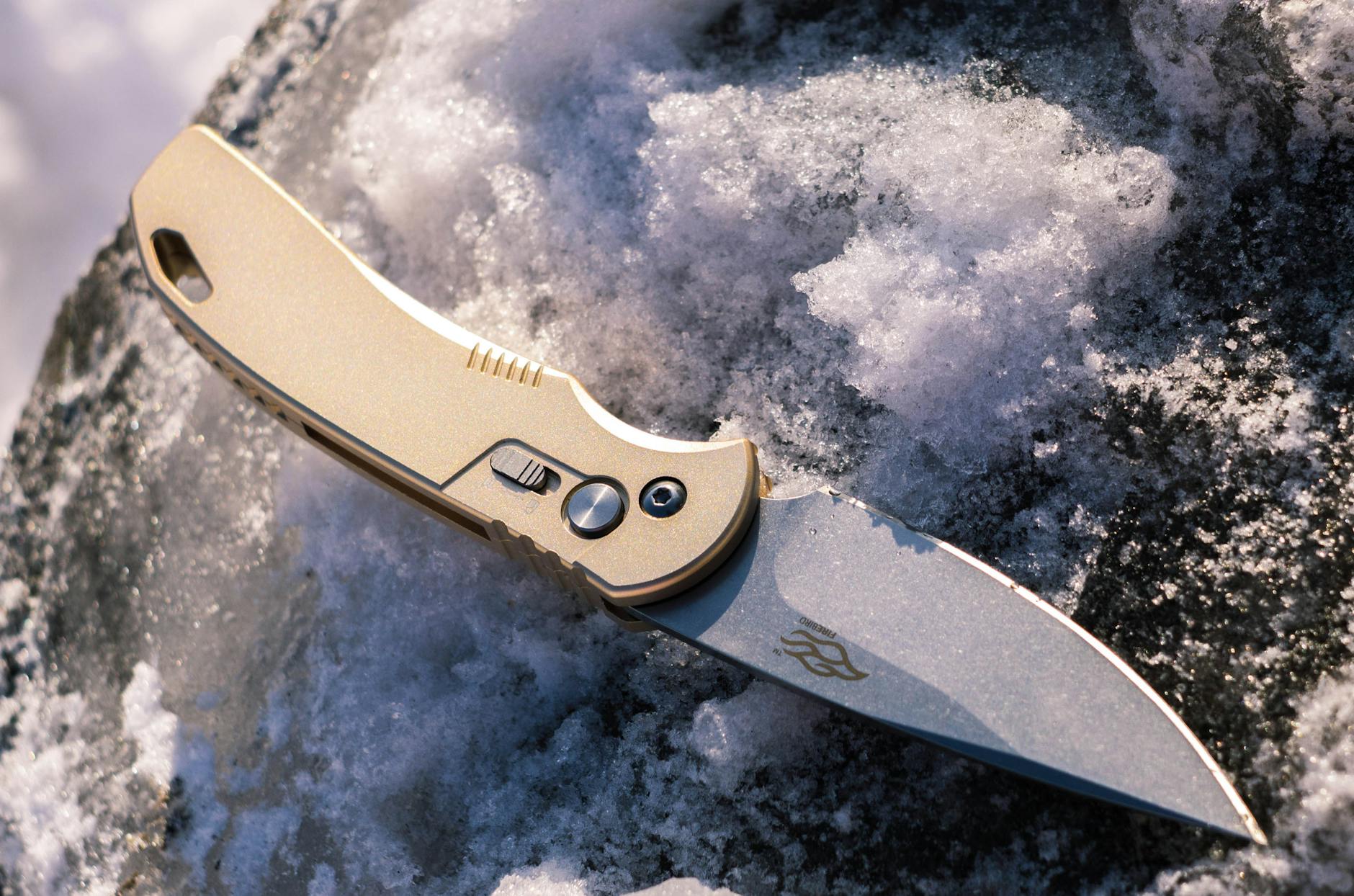
A quality knife is the most essential survival tool. Understanding the differences between fixed blades and folders—plus the steel types that define their performance—helps you choose the right tool for your needs.
Fixed Blade Advantages
Fixed blades have no moving parts, making them stronger and more reliable:
- Full-tang construction - Steel runs through the entire handle for maximum strength
- No lock to fail - Eliminates the weakest point of folding knives
- Batoning capability - Can be struck with wood to split logs for fire
- Easier cleaning - No pivot or liner gaps to trap debris
- Faster deployment - Immediately ready from sheath
Best Uses
Bushcraft, camping, survival situations, heavy-duty tasks, and any scenario where knife failure isn't acceptable.
Folding Knife Advantages
Folders prioritize portability and everyday practicality:
- Compact carry - Fits in pocket without sheath
- Social acceptability - Less alarming in public spaces
- Legal considerations - More jurisdictions allow concealed folder carry
- One-hand operation - Modern folders open instantly
Best Uses
EDC, urban environments, light cutting tasks, and situations requiring discretion.
Steel Types Explained
Steel choice affects edge retention, toughness, corrosion resistance, and ease of sharpening:
Carbon Steels
1095 - Classic carbon steel, easy to sharpen, takes excellent edge, but rusts without maintenance. Favored for bushcraft and survival. 5160 - Spring steel, extremely tough, good for batoning and abuse.
Stainless Steels
S30V - Excellent edge retention and corrosion resistance. The premium standard for folders. 154CM - Good all-around performer, easy to sharpen. VG-10 - Japanese steel with excellent edge, common in mid-range knives.
Super Steels
M390 - Exceptional edge retention and corrosion resistance. CPM-20CV - Similar to M390, made in the USA. These premium steels come at higher prices and require diamond stones for sharpening.
Making Your Choice
For survival and bushcraft, a 4-5 inch fixed blade in 1095 or S30V steel with a flat or Scandi grind handles everything from food prep to shelter building.
For daily carry, a 3-3.5 inch folder in S30V or similar steel balances capability with legal carry in most areas.
Many serious users carry both—a fixed blade for camp tasks and a folder for everyday convenience.