
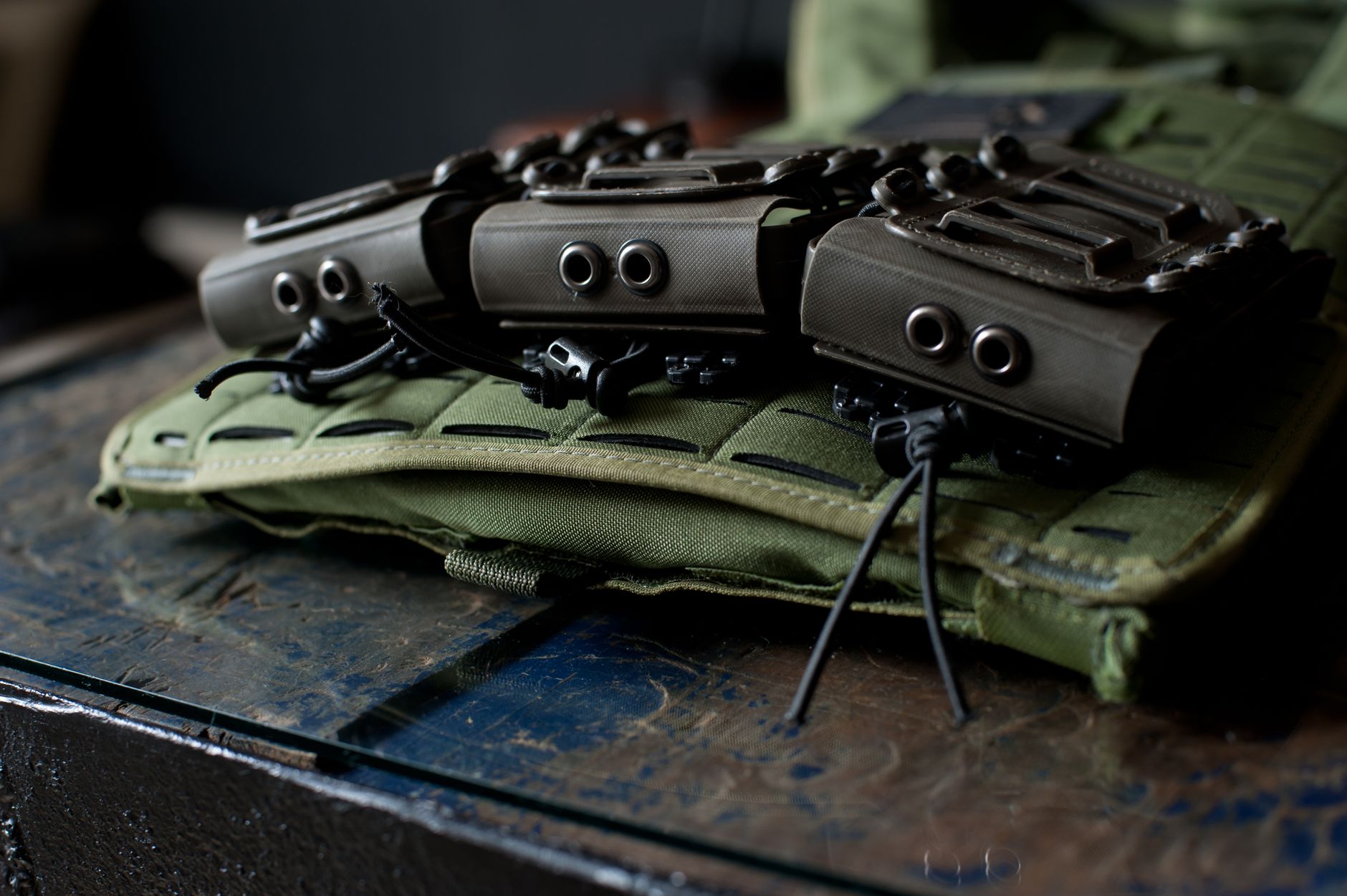
Body armor and load-bearing equipment are critical components of any serious tactical setup. Understanding the differences between plate carriers and chest rigs helps you choose the right system for your specific needs.
Plate Carriers: Ballistic Protection
Plate carriers are designed to hold ballistic plates that protect against firearm threats:
Protection Levels
- Level IIIA - Stops most handgun rounds including .44 Magnum (soft armor)
- Level III - Rated for rifle rounds including 7.62x51 NATO (hard plates)
- Level IV - Highest rating, stops armor-piercing .30-06 (hard plates)
Plate Materials
Steel plates offer durability and multi-hit capability at lower cost, but are heavy (8+ lbs per plate) and require spall coating. Ceramic plates are lighter (5-6 lbs) and provide better protection, but are more fragile and may only stop one hit. Polyethylene plates are the lightest option but thicker and more expensive.
Carrier Features
Look for adjustable shoulder straps and cummerbund, quick-release systems for emergency doffing, MOLLE webbing for accessories, and proper plate fit (10x12" is standard for front/back).
Chest Rigs: Load-Bearing Without Armor
Chest rigs prioritize magazine and equipment carriage over ballistic protection:
Advantages
- Significantly lighter than plate carriers
- Better ventilation and mobility
- Lower profile for concealment
- More comfortable for extended wear
Common Configurations
Magazine-focused rigs hold 4-8 rifle magazines in the front. Modular rigs offer customizable MOLLE panels. Harness-style rigs distribute weight across shoulders and back.
Choosing Between Them
Choose a plate carrier if:
- Ballistic threat is a realistic concern
- You're training for defensive scenarios
- Weight and mobility are secondary to protection
Choose a chest rig if:
- You prioritize mobility and endurance
- Ballistic threat is minimal
- You need extended-wear comfort
- Weight savings are critical
Fit and Sizing
Proper fit is essential for both systems. Carriers should sit with the top of the front plate at the sternal notch. Chest rigs should allow full range of arm motion and not ride up when kneeling or prone.


